

Born from the need for rapid pandemic screening at major universities, Diagnostic.ly quickly scaled to support NASA, Live Nation, and the country’s largest music festivals. Now in our fourth year, continuous innovation has transformed our software into the world’s most comprehensive last-mile healthcare platform.
As global health needs shift, we’ve focused our impact on the most underserved geographies and patient populations. By streamlining delivery for labs and healthcare providers through an affordable subscription model, we remove cost barriers and unlock new revenue streams—creating a win-win that makes high-quality care accessible everywhere.
Market Differentiation: In a crowded market, the brand’s consistent identity across the marketing website and SaaS portal established immediate trust with blue-chip partners like Live Nation. This high-level social proof, combined with a clear mission to serve underserved populations, increased the company’s valuation during funding rounds.

In the world of healthcare, the package design is more than just a container; it is the physical manifestation of medical authority. When Diagnostic.ly moved into the “last-mile” space, the box became the first point of contact for patients often performing complex diagnostic tests at home. By designing a kit that prioritized clarity, premium materials, and intuitive organization, the brand replaced the typical anxiety of medical testing with a sense of guided confidence. This professional presentation was instrumental in securing partnerships with high-stakes organizations like NASA and Live Nation, where the user experience had to be foolproof and the brand had to feel immediately trustworthy.
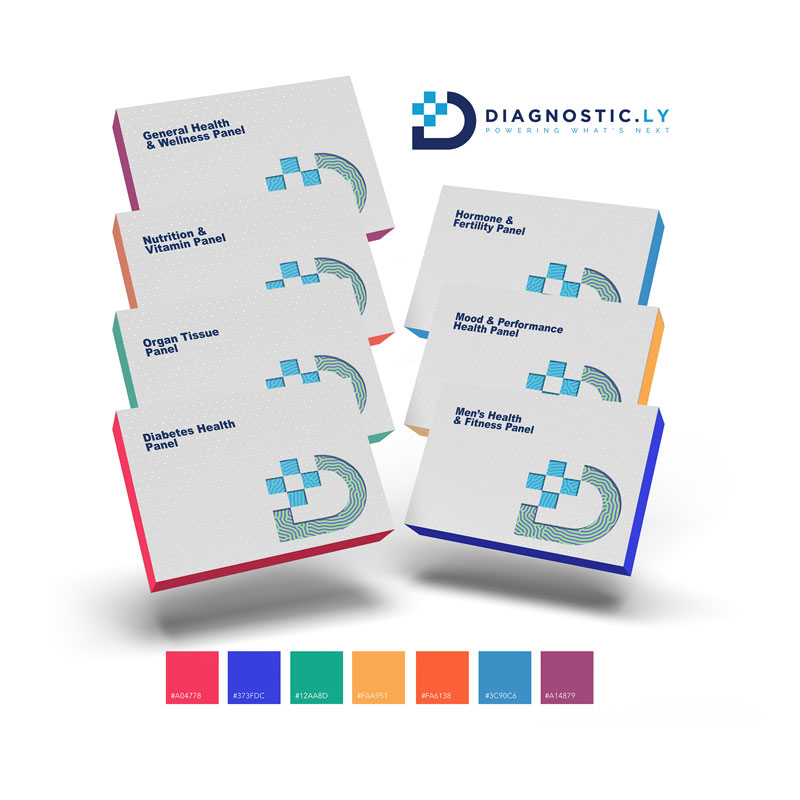
The effectiveness of the packaging lies in its role as a tangible extension of the SaaS platform. While the website and interface manage the data, the box delivers the care. By mirroring the clean, modern aesthetic of the Figma-designed UI on the physical kit, we created a seamless brand ecosystem. This “unified design language” meant that a user moving from the digital instructions to the physical components felt no cognitive friction. This cohesion didn’t just improve patient compliance; it served as a powerful sales tool for labs, proving that Diagnostic.ly offered a complete, end-to-end solution that was ready for the market—far beyond a simple software-only play.
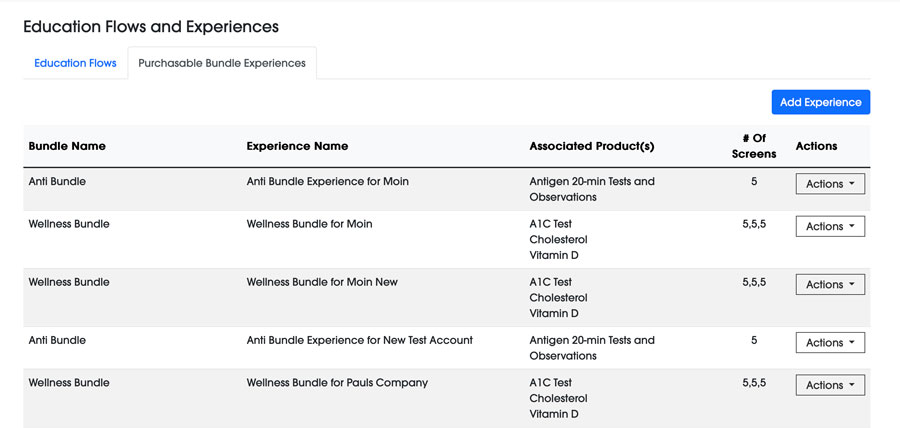
“When I built the SaaS site from scratch, I treated the interface as the most important ‘salesperson’ for the brand. I focused on a clean, modern aesthetic that reflects the precision of the hardware in the box. By controlling the design from the first design element, I ensured that the digital touchpoints—from the login screen to the final report—mirror the premium feel of the physical branding. It’s not just a tool; it’s a cohesive brand experience that proves to our clients that we value their time and their patients’ ease of use.”

Diagnostic.ly’s interface is built on the principle that healthcare technology should never be a hurdle. By replacing cluttered, legacy spreadsheets with a streamlined, intuitive dashboard, we’ve created a system where lab technicians and administrators can manage thousands of records with zero fatigue. The UI prioritizes “actionable data,” ensuring that critical results and logistical bottlenecks are flagged instantly. It is a high-performance environment that bridges the gap between complex backend data and effortless frontend navigation.
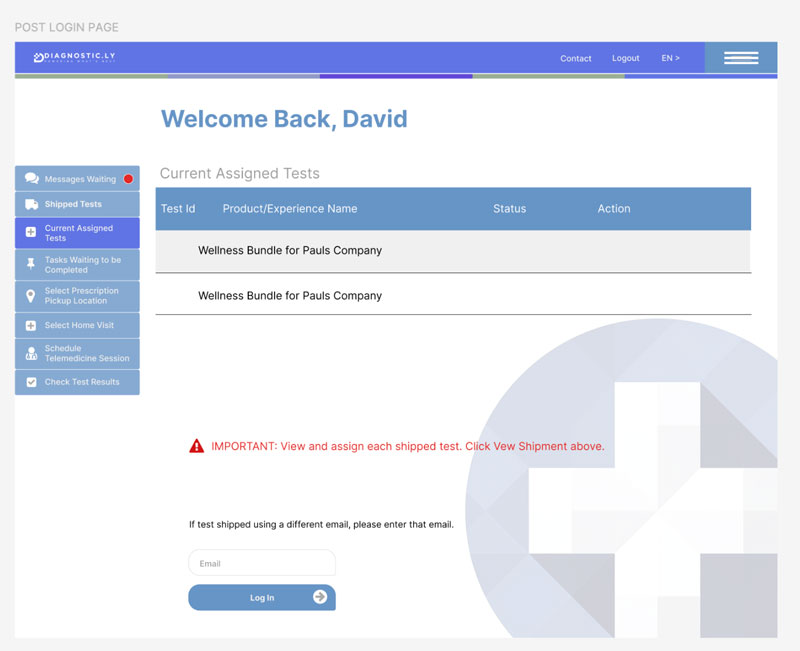
By leveraging Figma as the architectural foundation, the Diagnostic.ly interface was meticulously prototyped to ensure a “pixel-perfect” transition from concept to code. This wasn’t just about aesthetics; it was about building a high-fidelity design system where every component—from the diagnostic status toggles to the patient data grids—was stress-tested in a collaborative sandbox. Using Figma allowed for a rigorous iterative process, enabling us to map out complex user journeys and refine the UX architecture before a single line of the SaaS platform was even written.
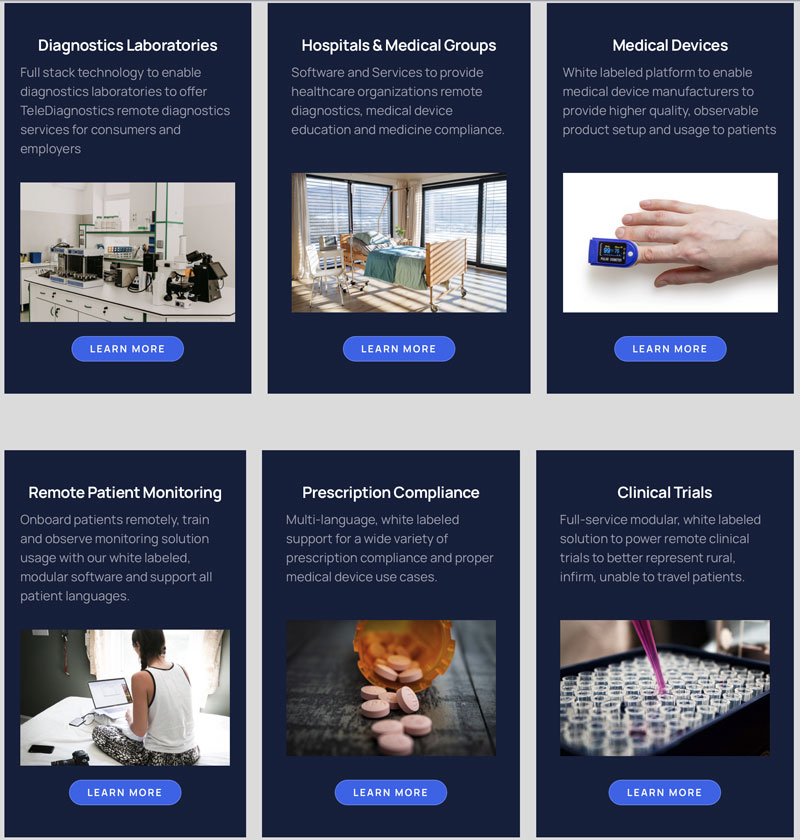
Diagnostic.ly’s interface is built on the principle that healthcare technology should never be a hurdle. By replacing cluttered, legacy spreadsheets with a streamlined, intuitive dashboard, we’ve created a system where lab technicians and administrators can manage thousands of records with zero fatigue. The UI prioritizes “actionable data,” ensuring that critical results and logistical bottlenecks are flagged instantly. It is a high-performance environment that bridges the gap between complex backend data and effortless frontend navigation.
The Marketing Website (The Hook): It served as the primary growth engine, using storytelling to explain how the platform solves the “last-mile” problem for labs. By presenting a sophisticated, high-end digital presence, it convinced enterprise giants that Diagnostic.ly was a peer, not just a vendor.
The SaaS Interface (The Retention): Built from scratch, the interface ensured that once a client was onboarded, the User Experience (UX) was frictionless. Features like multi-language support and real-time video chat during education sessions turned a complex medical task into a simple, guided process. This high level of “stickiness” is what makes a SaaS business model profitable.
The Packaging Design (The Delivery): The box was the final touchpoint in the patient’s journey. By maintaining brand consistency from the website to the physical kit, Diagnostic.ly reinforced its promise of high-quality care, leading to better patient outcomes and higher adoption rates for the labs paying for the service.